California AB 310: The Nevaeh Youth Sports Safety Act
California now requires youth sports coaches to be certified in CPR and AED use by January 1, 2027. Every coach will certify at a different time with a different expiration date — Volunteer Tracker tracks all of it automatically and keeps your coaches valid through the entire season.
What the Nevaeh Youth Sports Safety Act Requires
AB 310 — the Nevaeh Youth Sports Safety Act — was signed into law in 2025 (Chapter 254, Statutes of 2025) and amends California's youth sports safety requirements to address sudden cardiac arrest. It applies to youth sports organizations across the state, including Little League and other youth leagues.
The law phases in over two seasons: CPR and AED certification for coaches and a written emergency response plan are required by January 1, 2027, and on-site AED access plus maintenance follow by January 1, 2028. AB 310 also delayed the original AED-access deadline and removed the requirement that an AED be administered only by a medical professional — a designated, qualified person may now operate it.
AB 310 Compliance Deadlines
- By January 1, 2027
Coaches certified in CPR and AED use
Youth sports organizations must ensure their coaches hold current certifications to perform cardiopulmonary resuscitation (CPR) and to operate an automated external defibrillator (AED).
- By January 1, 2027
Written emergency response plan
Organizations must have a written emergency response plan that includes the location of the AED and the procedures to be followed during a sudden cardiac event.
- By January 1, 2028
On-site AED access during practices and matches
Athletes must have access to an AED during any practice or match. AB 310 delayed this from the original 2027 deadline and removed the requirement that it be administered only by a medical professional.
- By January 1, 2028
AED maintained and tested
Organizations must properly maintain and test their AED, as specified by the statute.
Why CPR/AED Certifications Are a Tracking Nightmare
CPR/AED certifications don't renew on one tidy date. Every coach certifies at a different time, and certifications carry different validity windows — some are valid for two years, others for three from the date of completion. Across a roster of coaches, that's dozens of independent expiration dates to watch.
Worse, a coach can be perfectly valid on opening day and lapse mid-season. If a certification expires partway through the season and a cardiac event happens afterward, the coach — and the league — are exposed to real liability. Spreadsheets and registration platforms that only show "cleared" or "not cleared" today can't see that cliff coming.
How Volunteer Tracker Tracks CPR/AED Certifications
Volunteer Tracker is built for exactly this kind of multi-year, per-volunteer expiration tracking — so no coach quietly lapses mid-season.
Automatic expiration dates
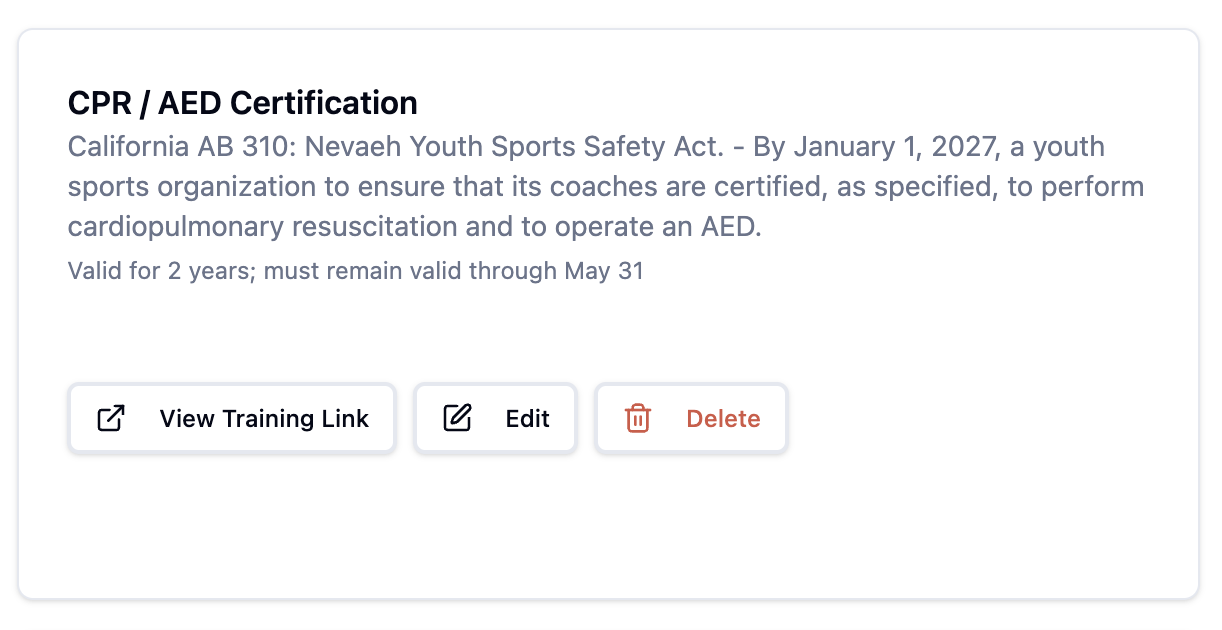
Set a validity period (for example, 2 years from submission) and Volunteer Tracker calculates each coach's expiration date automatically when they upload proof of certification.
Admin-set expiration
Already certified a year ago with a year of validity left? An admin can set the exact expiration date manually, so existing certifications are tracked accurately from day one.
“Must be valid through” the whole season
Add a required “valid through” date to any training. A coach who would expire mid-season is flagged as expired now — so you catch the gap before opening day, not after an incident.
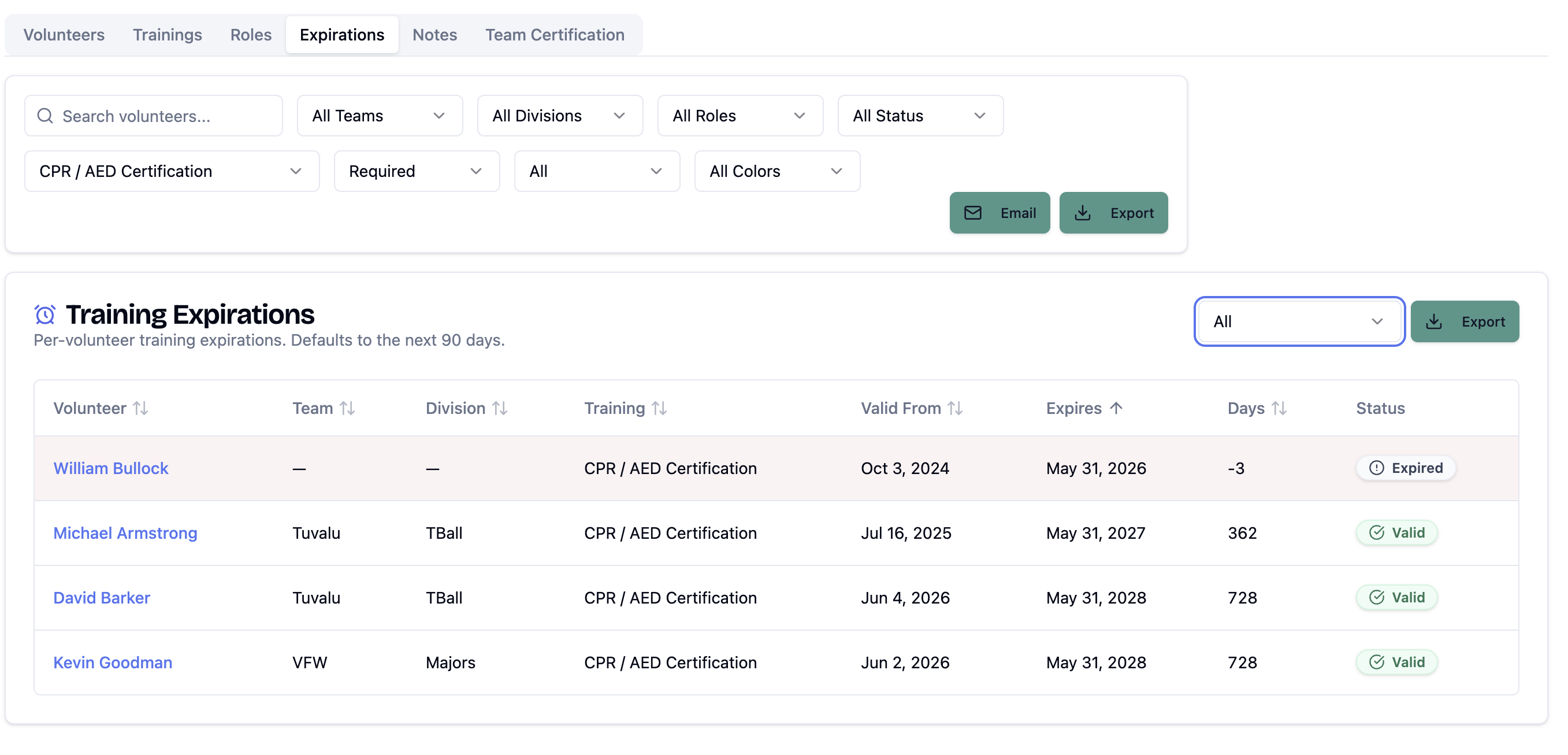
Filterable multi-year expiration report
A dedicated report shows every upcoming expiration across years and can be filtered — so you can see exactly who needs to re-certify and when, at a glance.